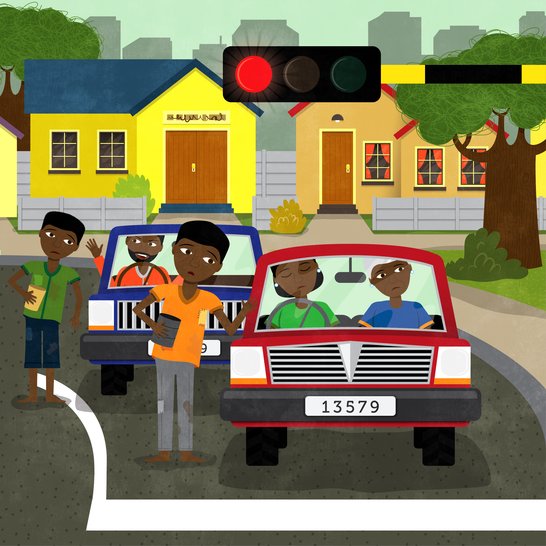
Ḓoroboni ya Nairobi,kule na hayani kha vhutshilo ho thogomeliwa, ho vha vha hu tshi dzula vhaṱhannga vha sina mahaya vho vha tshi tanganedza duvha linwe na linwe samusi li tshi ḓa. Duvha linwe nga matsheloni vhatukana vho vha tshi khou vhekanya dzithovho dzavho musi vha tshi vuwa vhusikuni hu no rothola maguvhani.U tuwisa phepha vho vha tshi funga mulilo nga mashika. Kha vhatukana a vha ho vha ho vha hu na Magozwe. O vha e mutukusa kha vhothe.
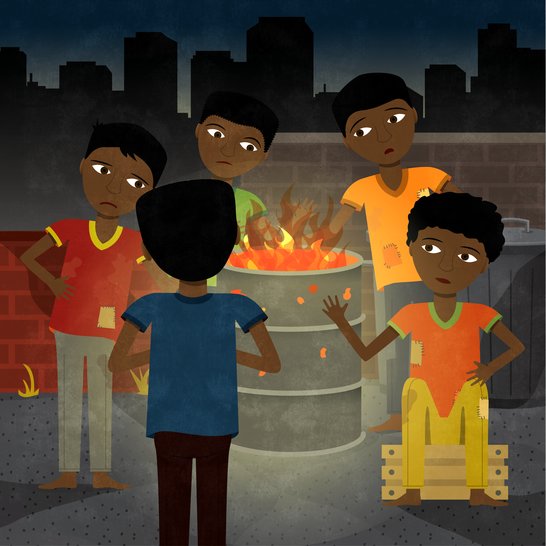
En la ajetreada ciudad de Nairobi, lejos de la apacible vida hogareña, vivía un grupo de jóvenes mendigos. Vivían el día a día como si no hubiera futuro. Una mañana, los chicos estaban empacando sus mantas después de dormir en la fría calle. Prendieron una fogata con basura para espantar el frío. Uno de los jóvenes del grupo era Magozwe. Era el más joven.
Musi vhabebi vha magozwe vha tshi lovha, o vha a na minwaha mitanu. O ya a dzula na malume wawe. A vha munna vho vha vha sina ndavha na nwana, vho vha vha sa fhi Magozwe zwiliwa zwo linganaho.Vho ita uri Magozwe a ite mishumo minzhi I no vhavha.
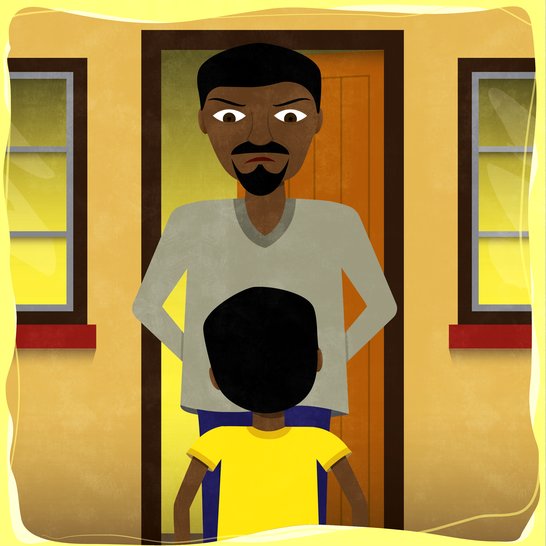
Cuando los padres de Magozwe murieron, él sólo tenía cinco años de edad. Se fue a vivir con su tío. Pero Magozwe no le importaba a ese hombre. No le daba suficiente comida. Y lo hacía trabajar muy duro.
Arali Magozwe a ṅuṅuna kana a vhudzisa, malume wawe vha do mu rwa. Musi Magozwea a tshi vhudzisa uri a nga ya tshikoloni, malume wawe vho mu rwa vha ri,” U tshi ḓaela nga maanda u guda zwinwe zwithu.” Nga murahu ha minwaha miraru ya u tambudziwa Magozwe a shavha kha malume. A thoma u dzula tshiṱaraṱani.
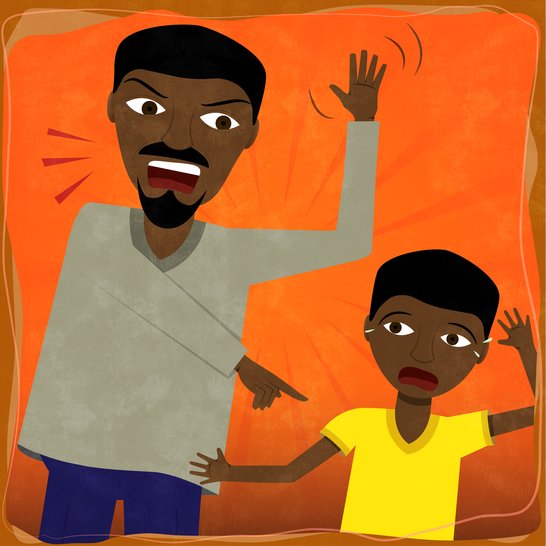
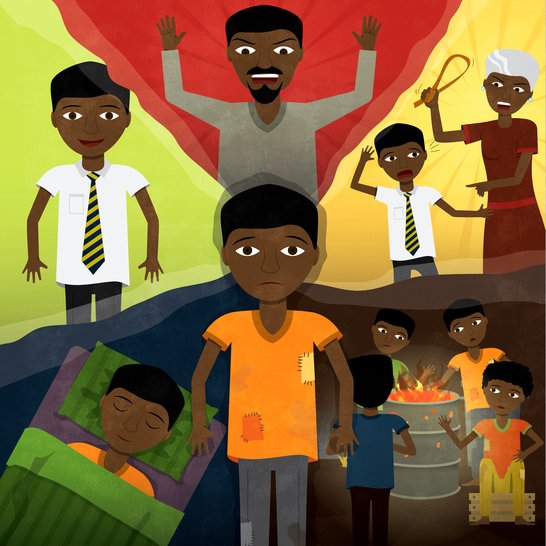
Si Magozwe se quejaba o hacía preguntas, su tío le daba una golpiza. Cuando Magozwe le preguntó si podía ir a la escuela, su tío lo golpeó y le dijo, “eres demasiado estúpido para aprender”. Después de tres años de vivir así, Magozwe se escapó de la casa de su tío. Empezó a vivir en la calle.
Vhutshilo ha tshitaratani ho vha hu tshi vhavha na vhathannga vhanzhi vho vha tshi tambula u wana zwiliwa, tshinwe tshifhinga vho vha tshi fariwa, tshinwe tshifhinga vha tshi rwiwa. Musi vha tshi lwala, ho vha hu sina thuso.
Vhothe vho vha vha tshi thembela kha tshelede thukhu ine vha i wana kha u humbela, na u rengisa mapulasitiki, zwishumiswa futhi. Vhutshilo vho vha vhu tshi kondesa nga uri nndwa na vhanwe vhane vha toḓa u vhusa tshipida tsha dorobo dzo vha dzi hone.
La vida en la calle era difícil y muchos de los niños tenían dificultades para conseguir comida día a día. Algunas veces los arrestaban, otras veces les daban golpizas. Cuando se enfermaban, no tenían quién los ayudara. El grupo de jóvenes dependía de lo poco que recibían mendigando, de la venta de plásticos y del reciclaje. La vida era aun más difícil por las peleas con grupos rivales que querían tener el control de ciertas partes de la ciudad.
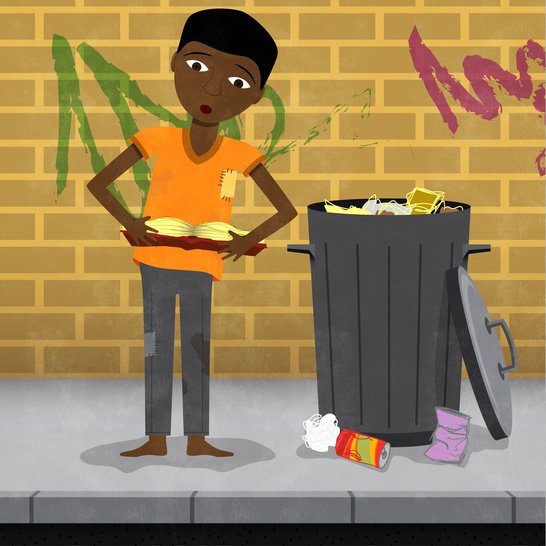
Linwe duvha Magozwe o vha a tshi khou pala kha tshifaramashika, a wana bugu yo thathekanaho ya nganea ya kale. A i kunakisa nga u bvisa mashika khayo a i dzhenisa kha saga ḽawe.
Duvha linwe na linwe a tshi fhedza u dzhia bugu a sedza zwifanyiso. O vha a sa koni u vhala maipfi.
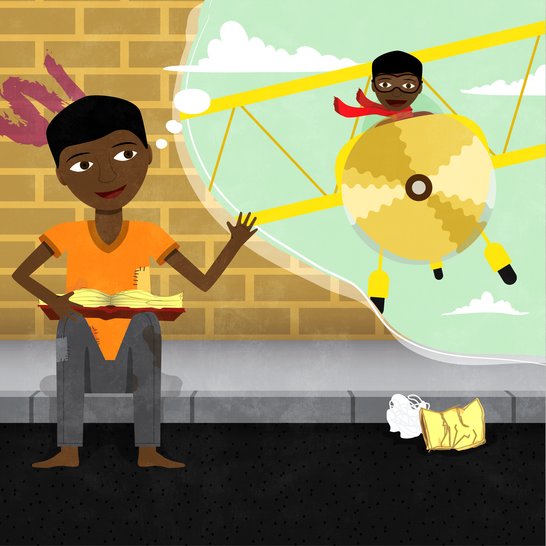
Un día, Magozwe estaba escarbando los basureros y encontró un libro de cuentos viejo y destrozado. Le quitó el polvo y lo guardó en su bolsa. Todos los días, sacaba el libro y miraba las ilustraciones. Pero no sabía cómo leer las palabras.
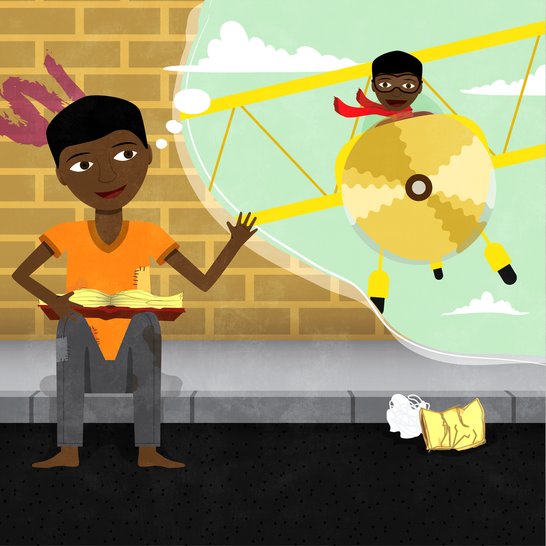
Zwifanyiso zwo amba nganea ya muthannga o hulaho a vha mufhufhuisa mabufho.
Magozwe o vha na dzangalelo la u fhufhisa mabufho. Tshinwe tshifhinga, o di humbula sa muthanga ane a vha kha nganea.
Las ilustraciones contaban la historia de un chico que creció y se convirtió en piloto. Magozwe fantaseaba con ser piloto. A veces, se imaginaba que él era el chico de la historia.
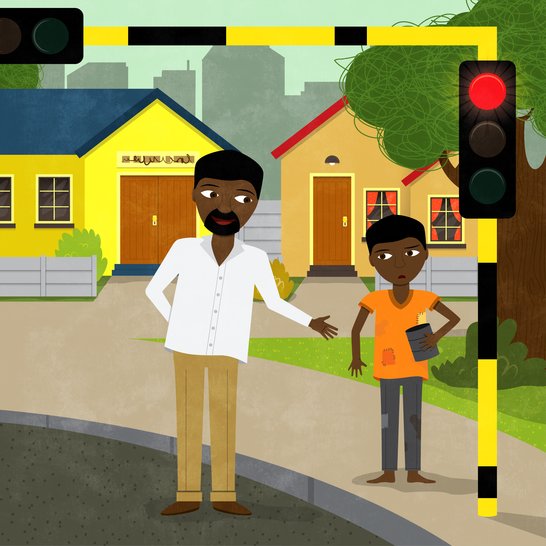
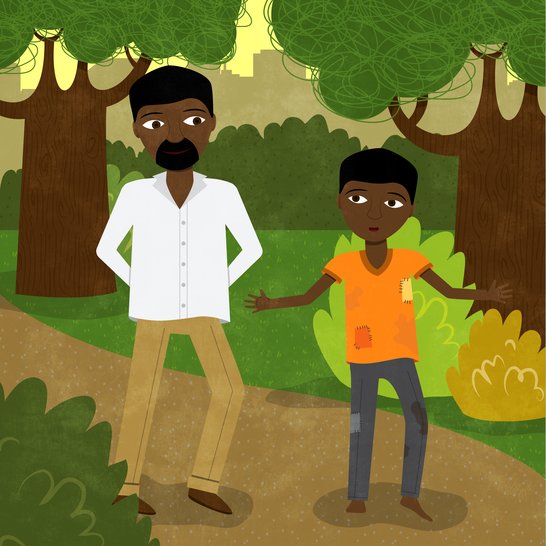
Ho vha hu tshi khou rothala Magozwe o vha o ima tshitaratani a tshi khou humbela. Munna o ya khae. “Ndaa, ndi nne Thomas. Ndi shuma tsini na fhano, fhethu hune wanga wana zwiliwa, ha amba munna.
Vha sumba nndu ya ṱaḓa i re na thanga ya lutombo, “Ndi a kholwa u do ya fhala u wana zwiliwa?” a vhudzisa .Magozwe a sedza munna, na nndu.” Thamusi,” a ralo, a mbo di tuwa.
Hacía frío y Magozwe estaba mendigando en la calle. Un hombre se le acercó. “Hola, soy Thomas. Trabajo cerca de aquí, en un lugar donde podemos darte comida,” dijo el hombre. Apuntaba hacia una casa amarilla con techo azul. “Ojalá vayas pronto a buscar comida” le dijo. Magozwe miró al hombre, y después miró la casa. “Quizá”, dijo, y se fue.
Murahu ha minwedzi i tevhelaho vhathannga vha sina haya vha dowela u vhona Thomas. O vha a tshi funa u amba na vhathu zwihulu vhathu vha no dzula zwitaratani. Thomas o vha a tshi thetshelesa nganea dza matshilo a vhathu. O vha o ḓiimisela na u kondelela a sa semani kana u sa thonifha. Vhanwe vhathannga vha thoma u ya kha nndu ya ṱada na lutombo u ri vha wane zwiliwa zwa tshiswiṱulo.
Con el paso de los meses, los jóvenes mendigos se acostumbraron a la presencia de Thomas. Él disfrutaba hablar con la gente, especialmente con los mendigos. Thomas escuchaba las historias de sus vidas. Era serio y paciente, y nunca maleducado ni irrespetuoso. Algunos de los chicos empezaron a ir a la casa amarilla y azul a buscar comida al mediodía.
Magozwe o vha o dzula kha guvha a tshi khou sedza bugu yawe ya zwifhanyiso musi Thomas a tshi dzula tsini nae.
“Nganea i amba nga mini?” ha vhudzisa Thomas.
“Ndi nga ha muthannga we a vha mufhifhisi wa bufho,” ha fhindula Magozwe.
“Dzina la muthannga ndi nnyi?” hu vhudzisa Thomas.
“A thi dvhi, a thi koni u vhala,” ha amba Magozwe a tshi ambela fhasi.
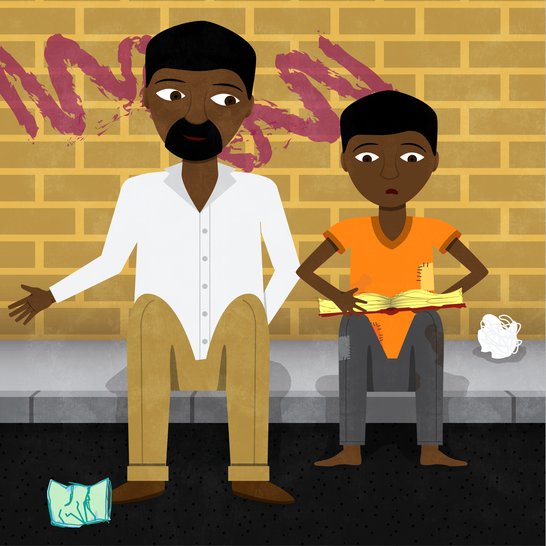
Magozwe estaba sentado en la calle mirando su libro cuando Thomas vino y se sentó a su lado. “¿De qué trata la historia?” preguntó Thomas. “Trata sobre un chico que se convierte en piloto,” respondió Magozwe. “¿Cómo se llama el niño?” preguntó Thomas. “No sé porque no sé leer,” dijo Magozwe en voz baja.
Musi vha tshi tangana, Magozwe a thoma u amba nga nganea yawe kha Thomas. Yo vha mafhungo a malume wawe na uri mulandu wawe o shavha.
Thomas ha ngo amba nga maanda, fhedzi a si vhudze Magozwe uri a ite mini, a dzula a tshi khou thetshelesa zwavhudi. Tshinwe tshifhinga vha ḓo amba vha tshi khou ḽa nḓunai ine ya vha na thanga ya lutombo.
Cuando volvieron a reunirse, Magozwe le relató la historia de su vida a Thomas. Le habló de su tío y de por qué huyó de esa casa. Thomas no hablaba mucho, y no le decía a Magozwe qué hacer, pero siempre le escuchaba con atención. Algunas veces conversaban mientras comían en la casa del techo azul.
Tshifhinga tshe Magozwe a vha ena minwaha ya fumi. Thomas o mufha bugu ntswa ya nganae. Yo vha i tshi khou amba nga muthannga wa mahayani wea hula a vha mutambi wa bola.
Thomas a vhalela Magozwe nganae yeneyo lunzhi lunzhi u swika linwe duvha a tshi ri, “Ndi vhona u nga ndi tshifhinga uri u ye tshikoloni u gude u vhala. U zwi vhona hani?
Cuando Magozwe cumplió alrededor de diez años, Thomas le regaló un nuevo libro de cuentos. Era la historia de un niño de una aldea que creció y se convirtió en un famoso jugador de fútbol. Thomas le leyó esa historia a Magozwe en muchas ocasiones, hasta que un día le dijo, “Creo que ya es tiempo que vayas a la escuela y aprendas a leer. ¿Qué te parece?” Thomas le explicó que conocía un lugar donde los niños podían vivir e ir a la escuela.
Magozwe a humbula nga fhethu huswa na uya tshikoloni. Thamusi malume wawe vho vha vha tshi khou amba ngoho ha ngo talifha uri a kone u guda tshithu? Thamusi vha murwa kha bulege iyo ntswa? o vha a tshi khou ofha.“Khamusi ndi khwine u dzula zwitaratani,” a humbula.
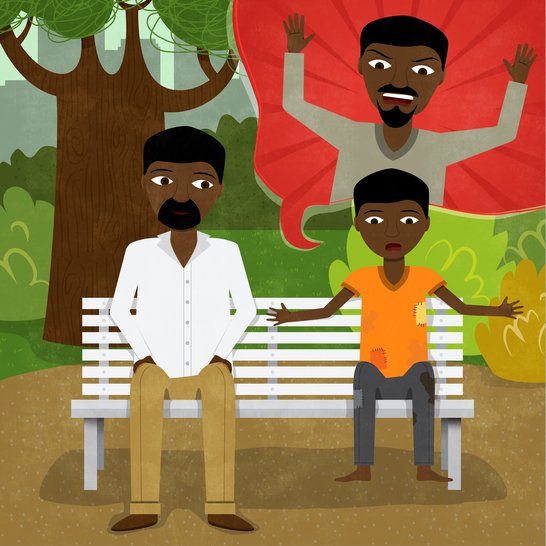
Magozwe pensó en este nuevo lugar y en ir a la escuela. Pero, ¿y si su tío tenía razón y era demasiado estúpido para aprender? ¿Y si volvían a darle golpizas en este nuevo lugar? Magozwe sintió miedo. “Quizá sea mejor seguir viviendo en la calle,” pensó.
U vhudza Thomas nga zwine a zwi ofha. Tshifhinga tshothe munna, o mu khuthadza uri vhutshilo vhu nga vha khwine kha bulege ntswa.
Magozwe le habló de sus miedos a Thomas. Con el paso del tiempo, Thomas pudo asegurarle al chico que su vida iba a ser mejor en ese nuevo lugar.
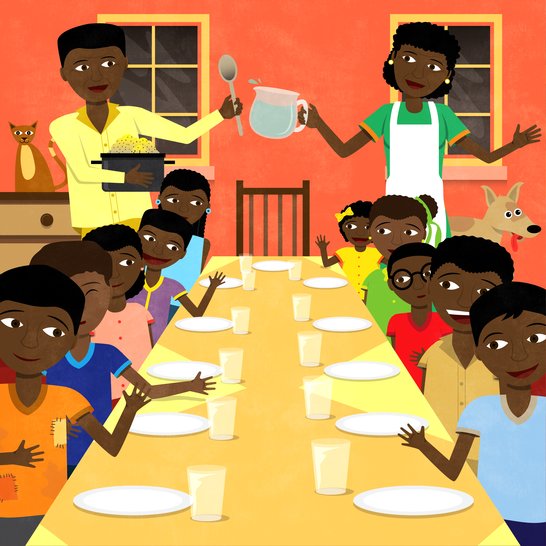
Zwino Magozwe a swielelwa kha lunwe lufhera nḓuni ine ya vha na thanga ya ṱaḓa.O shumisa lufhera na vhanwe vhathannga vhavhili. Vhothe vho fhelela vho vha vha vhathannga vha fumi vha tshi dzula kha nduni yeneyo.Vhothe na Mmane Cissy na munna wawe, mmbwa tharu, tshimange na mbudzi ya kale.
Y así fue como Magozwe se fue a vivir a una habitación en una casa con techo verde. Compartía su habitación con otros dos chicos. Había un total de diez chicos viviendo en esa casa. Vivían junto a la tía Cissy y su esposo, tres perros, un gato y una vieja cabra.
Magozwe a thoma tshikolo zwi tshi konḓa.
O fanela u shuma, zwihulwane u lingana na vhanwe. Tshinwe tshifhinga a tshi toda u litsha. Fhedzi a humbula nga mufhufhisi na mutambi wa bola kha bugu ya nganea. U fana navho a si fhele mbilu.
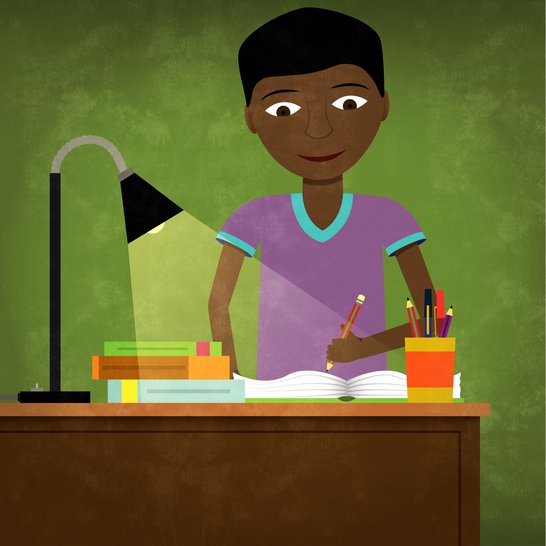
Magozwe empezó a ir a la escuela y fue difícil. Tenía mucho con qué ponerse al día. Muchas veces quiso rendirse. Pero pensaba en el piloto y en el jugador de fútbol de los libros. Al igual que ellos, Magozwe no se rindió.
Magozwe o vha o dzula mutani nḓuni ire na thanga dala, a tshi khou vhala bugu i no bva tshikoloni. Thomas a da a dzula tsini nae.
“NganaeiI amba nga ha mini?” a vhudzisa Thomas.
“I amba nga muthannga we a vha mudededzi.” a fhindula Magozwe.
“Dzina la muthannga ndi nnyi?” ha vhudzisa Thomas.
“Dzina lawe ndi Magozwe,” ha amba Magozwe a tshi khou nwenwela.
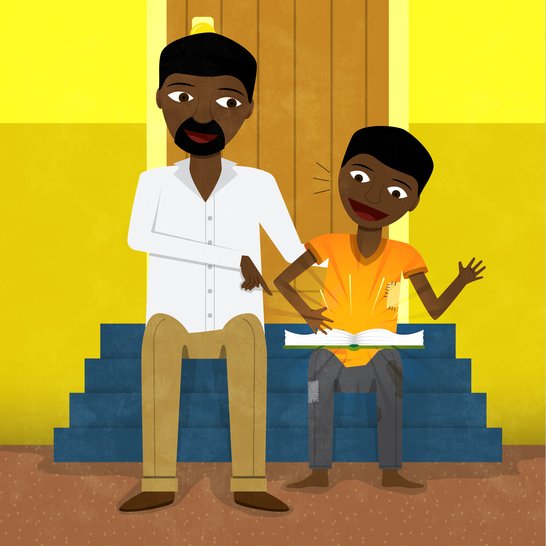
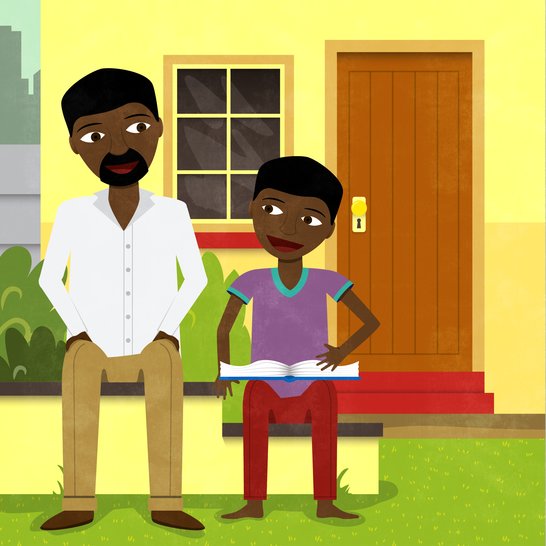
Magozwe estaba sentado en el patio de la casa del techo verde, leyendo un libro de cuentos de su escuela. Thomas se le acercó y se sentó junto a él. “¿De qué trata la historia?” preguntó Thomas. “Trata sobre un chico que se convierte en profesor,” respondió Magozwe. “¿Cómo se llama el chico?” preguntó Thomas. “Su nombre es Magozwe,” dijo Magozwe sonriendo.